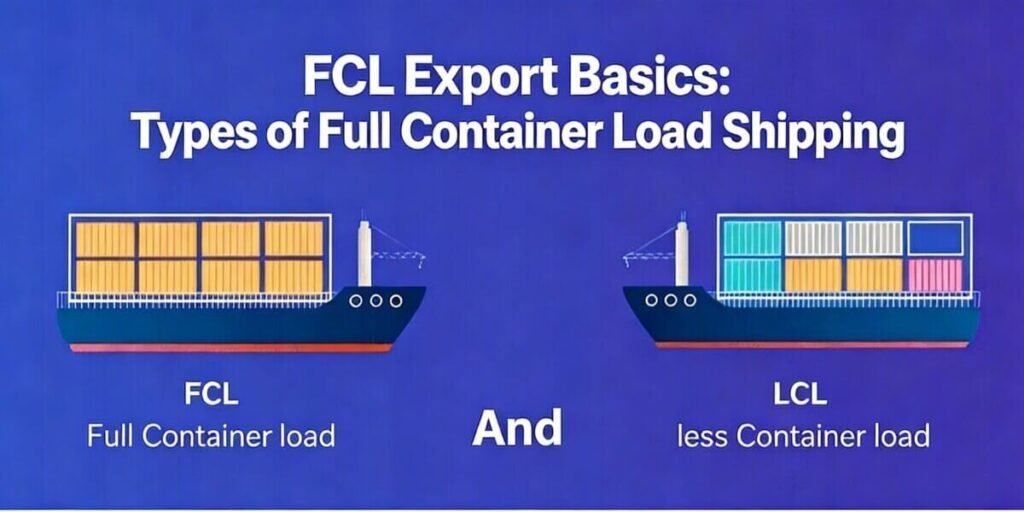
FCL Export Basics are essential for anyone looking to ship goods internationally with confidence. Understanding full container load (FCL) shipping helps exporters move an entire container of cargo safely, efficiently, and cost-effectively. This guide explains the different types of FCL shipping, the main advantages for international logistics, and practical tips for choosing the right container shipping method. Whether you are new to global shipping or aiming to optimize your export strategy, mastering FCL Export Basics provides a solid foundation for managing shipments successfully.
Understanding Full Container Load Shipping
1. Definition and Concept of Full Container Transport
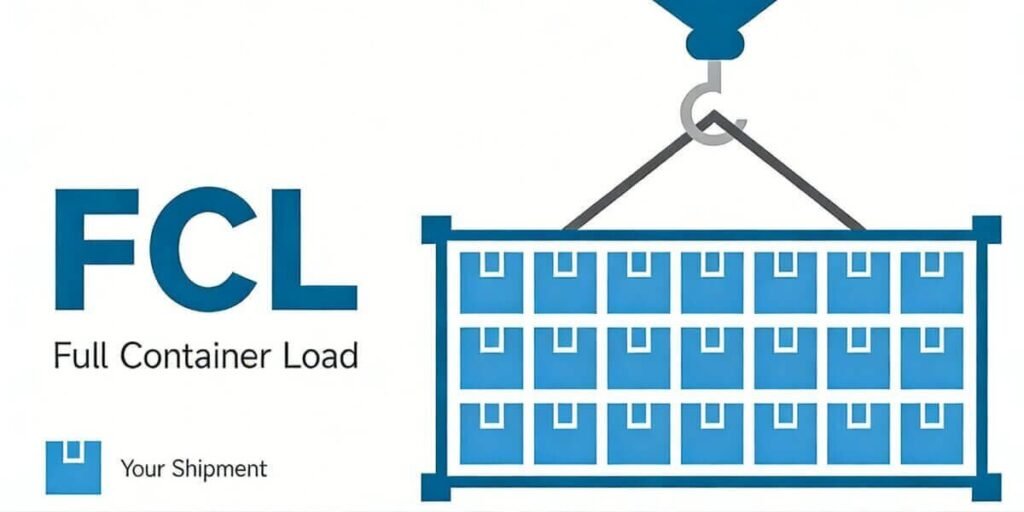
FCL is a shipping method where a whole container is reserved for a single shipper’s cargo. The exporter has full control over loading, securing, and sealing, and the container remains sealed until it reaches its destination. There is no sharing with other shipments, which reduces handling risks.
FCL is commonly used for large volumes, high-value, or sensitive goods. Compared to LCL, it lowers the chance of damage or loss and usually shortens transit times since there is no need for consolidation at ports.
From an operational perspective, FCL allows exporters to plan loading sequences, use specialized packing, and optimize space, which is especially important for electronics, furniture, or perishable items. Freight forwarders often recommend FCL when shipment volume is large, delivery speed matters, or cargo integrity is critical. It is not just about filling a container but ensuring the shipment arrives safely, on time, and intact.
2. Comparing FCL and LCL: What Exporters Should Know
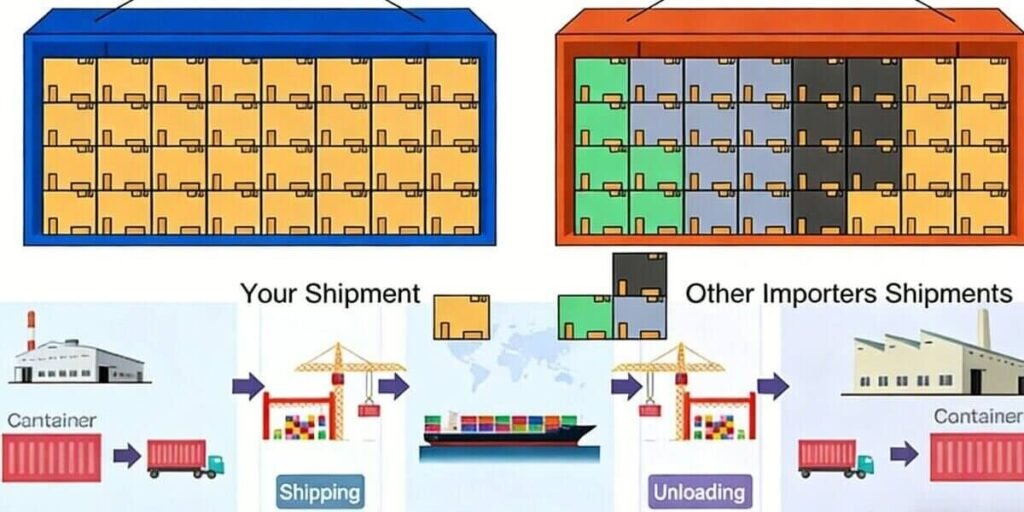
FCL (Full Container Load) and LCL (Less than Container Load) are two common shipping methods that serve different needs. In LCL, multiple exporters share a container, which means your cargo may be handled multiple times at ports or warehouses. FCL gives a single shipper exclusive use of the container, allowing full control over loading, securing, and transportation.
FCL offers better security because fewer handling points reduce the risk of damage, loss, or theft. The container is sealed at origin and remains sealed until delivery, which is important for high-value or sensitive goods. Transit times are usually faster with FCL since there is no waiting for consolidation or deconsolidation.
Documentation and customs procedures are simpler with FCL because only one shipper’s paperwork is involved. In contrast, LCL requires documentation for each exporter, which can increase the chance of errors or delays.
In practice, exporters use LCL for small shipments to save costs, while FCL is preferred for large volumes, time-sensitive cargo, or valuable goods. Freight forwarders often recommend FCL for shipments over 15–20 cubic meters, as it provides greater control, security, and reliability throughout the shipping process.
3. Advantages and Best Use Cases for Dedicated Container Shipments
FCL is ideal for large shipments, high-value or sensitive goods, and time-critical deliveries. When cargo can fill a container, FCL allows efficient loading and minimizes movement during transit. For electronics, machinery, perishable items, and other fragile goods, fewer handling points reduce the risk of damage or theft.
Direct shipping also shortens transit times, avoiding delays from consolidation or deconsolidation that LCL often requires. Customs clearance is simpler with a single shipper, reducing paperwork errors and speeding up processing.
Freight forwarders usually recommend FCL for shipments over 15–20 cubic meters, for valuable or fragile cargo, or when timing is crucial. Choosing FCL ensures control, security, and reliability from origin to destination, giving exporters confidence their goods will arrive safely and on schedule.
Modes of FCL Export Transport
1. Ocean Freight Services for Full Container Shipments
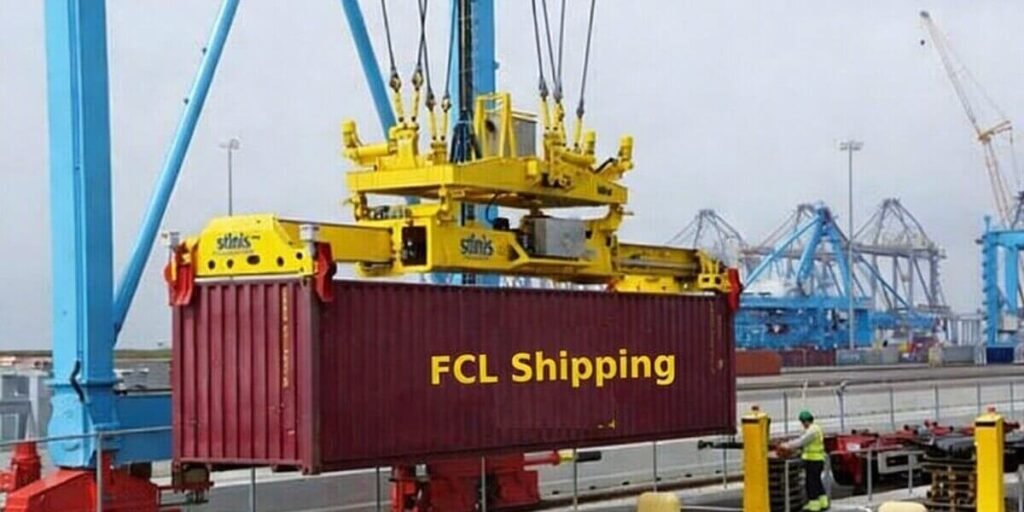
Ocean FCL is the most common method for exporting full containers. In this approach, the container is loaded at the shipper’s warehouse, carefully packed and secured, then sealed before being shipped via cargo vessels to the destination port. This ensures that the cargo remains untouched until it arrives, which is important for both safety and accountability.
The main advantage of ocean FCL is cost efficiency for large shipments, as the cost per unit decreases when a full container is used. It is also versatile, handling a wide range of cargo types including general goods, machinery, electronics, and even refrigerated items. With the extensive network of shipping routes, ocean FCL offers global reach, making it the standard choice for most international exporters.
This method works best for large volumes that can fill a 20ft or 40ft container, non-urgent shipments where standard transit times are acceptable, and exporters who want reliable, secure container transport with minimal handling along the way.
2. Air Cargo Shipping for High-Value and Time-Sensitive Goods
Air FCL is less common than ocean FCL but is used when speed is essential. In this method, an entire air cargo container, or ULD (Unit Load Device), is dedicated to a single exporter’s shipment, ensuring minimal handling and higher control over the goods.
The main advantage of air FCL is fast transit time, making it ideal for urgent shipments or high-value items. Because the cargo is handled fewer times, the risk of damage is reduced, and security is higher for sensitive or valuable goods.
Air FCL is suitable for perishable items like fresh food, flowers, or pharmaceuticals, as well as high-value electronics or fashion products that require quick delivery. It is also preferred by exporters who are willing to pay a premium for speed, security, and reliability.
3. Land and Rail Transport Solutions for Regional and Cross-Border Logistics
Land and rail FCL is becoming increasingly popular for regional trade in Europe, Asia, and North America. In this method, entire containers are transported by truck or train, and it is often used as part of multimodal shipments combined with sea or air transport.
The main advantage is speed. Overland routes can be faster than sea freight for regional shipments, while rail services often run on fixed schedules, providing more predictable transit times. It is also cost-effective for destinations far from ports, avoiding extra handling and inland transport costs.
Land and rail FCL is suitable for cross-border trade between neighboring countries or regions, cargo that needs faster delivery than ocean freight but is not urgent enough for air, and exporters seeking flexible multimodal solutions combining road, rail, and sea transport.
Summary of Ocean, Air, and Land FCL Export Shipping
Choosing the right FCL export method depends on the shipment’s volume, urgency, cargo type, and budget. Ocean FCL is the most cost-effective choice for large shipments and a wide range of cargo, offering reliability for long-distance international trade. Air FCL is best when speed is critical or for high-value and sensitive goods, minimizing handling and transit time. Land and rail FCL are ideal for regional trade, providing faster delivery than sea freight, predictable schedules, and cost efficiency for inland destinations.
Understanding the advantages and limitations of each FCL option allows exporters to make informed decisions, ensuring their cargo moves securely, efficiently, and in the most cost-effective way.
Key Transportation Features and Considerations
Cost Factors and Pricing in International Container Shipping
Cost varies by transport mode, shipment volume, and route.
- Ocean FCL
Ocean freight is the most cost-effective for full containers, especially large shipments. Cost per unit decreases as the container is fully utilized. Additional fees may include port handling, documentation, and customs duties. Overall, ocean FCL offers predictable and scalable costs. - Air FCL
Air FCL is the most expensive due to fuel costs, limited cargo space, and airport fees. Its fast delivery and reduced handling risk make it worthwhile for high-value or urgent shipments. - Land/Rail FCL
Costs fall between ocean and air. Rail is economical for inland destinations far from ports, while trucking costs can vary based on fuel, tolls, and cross-border fees. Multimodal solutions can balance cost and transit time.
Summary: Ocean FCL suits cost-sensitive, high-volume shipments. Air FCL is ideal for urgent or high-value goods. Land/Rail FCL works well for regional or multimodal transport where balancing cost and speed is important.
Transit Times for Sea, Air, and Overland Freight
Transit time is key for planning delivery schedules and handling perishable goods.
- Ocean FCL
Moderate transit times depending on sea routes, vessel capacity, and port operations. Regional shipments may take days; long-distance shipments can take weeks. Reliable for standard deliveries. - Air FCL
Fastest transit option. Entire air containers (ULDs) allow direct flights and quick handling, often delivering in a few days. Ideal for perishable, urgent, or time-sensitive goods. - Land/Rail FCL
Transit time varies by distance, border procedures, and infrastructure. Rail is faster than sea in many regional trades, while road transport offers flexibility but may face delays. Multimodal solutions balance speed and cost.
Summary: Ocean FCL suits standard shipments. Air FCL is best for urgent or high-value goods. Land/Rail FCL works for regional trade or multimodal logistics with predictable schedules.
Risk Management and Security in Export Container Transport
Understanding risks ensures cargo safety throughout the journey.
- Ocean FCL
Secure due to sealed containers and minimal handling. Risks include port congestion, weather, or handling damage. Proper sealing, insurance, and reputable carriers reduce risks. - Air FCL
Highest security. Minimal handling, strict airport security, and dedicated containers protect high-value or sensitive goods. Ideal for fragile or perishable shipments. - Land/Rail FCL
Moderate risks. Challenges include traffic delays, customs inspections, or accidents. Proper container locking, route planning, and tracking mitigate most risks.
Summary: Ocean FCL is secure for large shipments. Air FCL provides maximum protection. Land/Rail FCL is reliable for regional trade if precautions are taken.
Selecting the Right Transport Mode for Different Cargo Types
Different FCL modes suit different cargo types based on volume, value, fragility, and handling needs.
- Ocean FCL
Highly versatile. Suitable for machinery, furniture, electronics, bulk commodities, and non-perishable goods. Refrigerated containers allow perishable shipments. Best for large volumes that are not extremely time-sensitive. - Air FCL
Ideal for high-value, fragile, or urgent cargo: electronics, pharmaceuticals, fashion, perishable foods, and medical supplies. Space is limited, but speed and security outweigh cost. - Land/Rail FCL
Suitable for industrial products, machinery, bulk non-perishable goods, and regional shipments. Effective for cross-border trade and multimodal solutions combining sea, air, or rail.
Summary: Ocean FCL is best for large and diverse shipments. Air FCL suits urgent or high-value cargo. Land/Rail FCL works for regional trade or multimodal logistics. Matching cargo to the appropriate FCL mode ensures safe, timely, and cost-effective delivery.
FCL Export Process Essentials
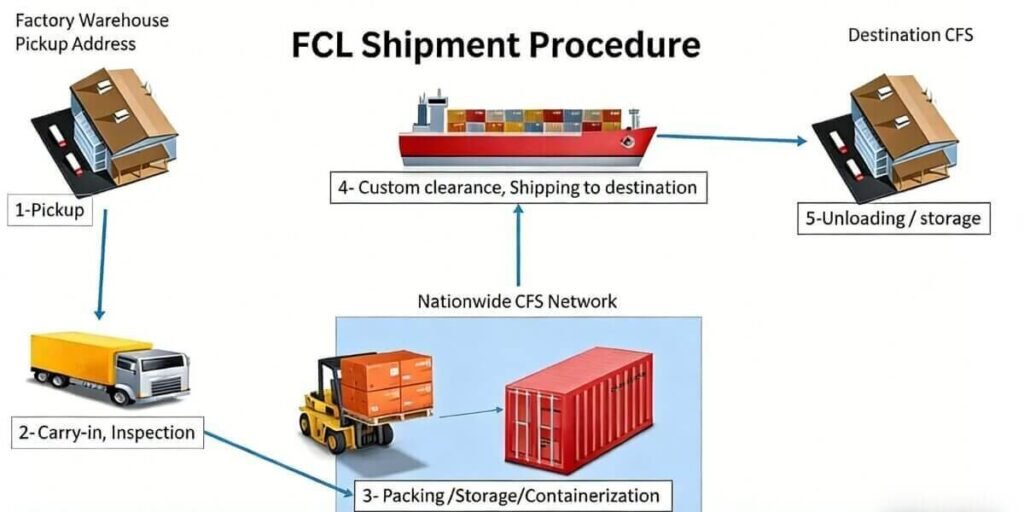
Exporting goods via FCL requires careful planning and coordination to ensure shipments arrive on time, intact, and compliant with regulations. From a logistics perspective, the process generally includes the following steps:
1. Container Booking and Reservation Tips for Exporters
Booking is the first and critical step in the FCL export process. Exporters reserve a container with a shipping line or freight forwarder, specifying details such as cargo type, volume, container size, and destination. Proper booking ensures that the container is available when needed, confirms shipping schedules, and locks in competitive freight rates.
From a practical logistics perspective, providing accurate information at this stage is essential. Misstated weight, dimensions, or cargo type can lead to delays, additional charges, or even rejection at the port. Experienced exporters often coordinate with their freight forwarder to select the most suitable container type, plan the shipping route, and align the booking with inland transport schedules to avoid last-minute complications.
2. Proper Loading and Securing of Goods in Containers
Container stuffing is the process of loading goods into the container, and it is a critical step in FCL exports. Proper packing and loading techniques ensure cargo is protected and space is used efficiently. Exporters must secure goods with straps, pallets, or other stabilizing materials, and distribute weight evenly to prevent imbalance during transit.
For specialized cargo, such as perishable items or temperature-sensitive products, reefers or other specialized containers must be properly prepared and tested before sealing. A well-stuffed container minimizes movement of cargo, reducing the risk of damage, accidents, or delays, and ensures the shipment arrives in the same condition it was loaded.
3. Step-by-Step Customs Clearance Procedures for Smooth Export
Customs clearance is a crucial step where all required documentation and declarations are submitted to the export authorities. Key documents usually include the commercial invoice, packing list, bill of lading, export license (if needed), and certificates of origin.
From a logistics perspective, accurate and complete documentation is essential to avoid delays, fines, or container hold-ups at the port. Experienced customs brokers or freight forwarders can help ensure compliance, submit paperwork correctly, and expedite inspections. Efficient customs clearance keeps the shipment on schedule and reduces the risk of unexpected costs or regulatory issues.
4. Documentation and Shipment Tracking Best Practices
Once the container is on its way, tracking and proper documentation become essential. Shipping lines and freight forwarders provide real-time tracking, allowing exporters to monitor the container’s location, estimated arrival, and any potential delays.
At the same time, maintaining accurate documentation such as the bill of lading, shipment confirmation, and insurance certificates is critical. These documents help resolve disputes, verify compliance with regulations, and serve as proof of delivery. From a practical logistics standpoint, staying on top of tracking and paperwork ensures smooth communication with partners, reduces risks, and gives exporters confidence that their cargo is moving safely toward its destination.
Summary of Key FCL Export Practices
Following a clear and structured FCL export process from booking the container, to proper stuffing and securing of cargo, completing customs clearance, and actively tracking the shipment helps exporters minimize risks, avoid delays, and maintain cargo integrity. Each step plays a practical role: accurate booking ensures container availability, careful loading prevents damage, compliant customs procedures avoid fines, and real-time tracking allows timely intervention if issues arise.
Understanding and managing these steps is essential for a smooth FCL export experience, whether shipping by ocean, air, or land, and gives exporters confidence that their goods will arrive safely, on time, and in optimal condition.
For a more detailed overview, check out our export logistics guide.
Frequently Asked Questions About Full Container Shipping
Full Container Load (FCL) shipping dedicates an entire container to a single exporter’s cargo. In contrast, Less than Container Load (LCL) consolidates multiple exporters’ goods into one container. FCL offers enhanced security, faster transit times, and fewer handling points, making it ideal for large-volume shipments, high-value items, or sensitive goods in international container transport.
Selecting the appropriate full container load shipping option depends on shipment volume, urgency, cargo type, and budget. Ocean freight is cost-effective for large shipments, air cargo provides fast delivery for high-value or time-sensitive goods, and land or rail transport is suitable for regional trade or multimodal shipping. Evaluating cost, transit times, and security requirements is essential for efficient container export operations.
Key documentation for full container exports includes the commercial invoice, packing list, bill of lading, export license (if applicable), and certificates of origin. Maintaining accurate paperwork ensures compliance with customs regulations, smooth container release, and legal proof of shipment. Working with a reliable freight forwarder or customs broker simplifies documentation and reduces the risk of delays.s broker can simplify this process.
Cargo security depends on proper container stuffing, sealing, and careful handling. Choosing reputable shipping lines, purchasing cargo insurance, and using real-time tracking systems significantly reduces risks. Specialized containers, such as refrigerated units for perishable goods, help maintain product quality throughout the shipping process.
Transit times vary by shipping mode and route. Ocean freight typically takes several days to weeks depending on distance, air cargo is the fastest with delivery in just a few days, and land or rail transport provides moderate transit times for regional shipments. Planning shipments according to urgency ensures goods arrive on schedule while optimizing international logistics efficiency.
Practical Tips for Efficient International Container Transport
Understanding FCL (Full Container Load) shipping is essential for exporters aiming to optimize cost, transit time, security, and cargo handling. Selecting the right FCL type depends on shipment volume, urgency, cargo characteristics, and budget. Ocean FCL is the most economical for large shipments that can fill a container. Air FCL is best for high-value or time-sensitive cargo. Land or rail FCL works well for regional trade and multimodal transport.
To ensure smooth and efficient operations, exporters should plan shipments in advance, properly stuff and secure containers, and maintain accurate documentation at every stage. Collaborating with experienced freight forwarders, shipping lines, and customs brokers can streamline the process. Tracking systems and cargo insurance help protect against delays, damage, or loss.
By following these practices, exporters can reduce risks, improve logistics efficiency, and achieve reliable and cost-effective FCL shipping, whether moving goods by sea, air, or overland, while ensuring timely delivery and maintaining cargo integrity.
Taking Action to Streamline Your FCL Export Process
Ready to optimize your FCL shipping and make your export process more efficient? Start by carefully evaluating your shipment volume, urgency, and cargo type. Choosing the right FCL method, whether ocean, air, or land, combined with proper planning, can save time, reduce risks, and ensure your goods arrive safely and on schedule.
Working with experienced freight forwarders and logistics professionals helps streamline booking, container stuffing, and documentation while providing practical advice on customs clearance, tracking, and cargo insurance. This professional support ensures a smooth, secure, and cost-effective shipping experience.
Contact us today to discuss your FCL export needs or get expert guidance tailored to your cargo. Take the first step toward reliable international shipping and make your exports hassle-free.
We provide hands-on support for FCL shipping and international logistics, helping businesses deliver their cargo safely, efficiently, and cost-effectively.
📩 vincent.qiu.logistics@gmail.com
Follow us for tips on container booking, shipment tracking, customs clearance, and multimodal transport or reach out for personalized solutions that fit your export requirements.
Related Articles and Resources on Container Shipping and Exporting
- Dangerous Goods Shipping Guide: Regulations, Documentation, and Safe Transport
- Third-Party Customs Declaration: Key Compliance Steps for Safe Shipping
- Short-Haul Trucking in International Logistics: The Key Link Between Ports, Warehouses, and Customs
- Shipping Counterfeit & Brand-Sensitive Goods Internationally: Tips and Best Practices
- International Logistics Solutions: Comprehensive Guide for Global Shipping